A good booth activation has a few jobs. It should let people use your product and understand something about how it works. Ideally, it gives them a little “wow” moment. It should produce data you can report on, from participation numbers to a connection between attending the event and becoming an active user. And it should leave the people working the booth free to have conversations.
That’s the brief I keep coming back to across different jobs and products, and I wanted to write more about it.
Let people experience the mechanics
This doesn’t have to follow the product’s usual onboarding or main workflow. But asking someone to sign up on a shared booth computer isn’t enough to satisfy “touch the product” either. I want them to take an action that helps them understand what the product does and why it’s useful. The activation can provide its own route to that understanding.
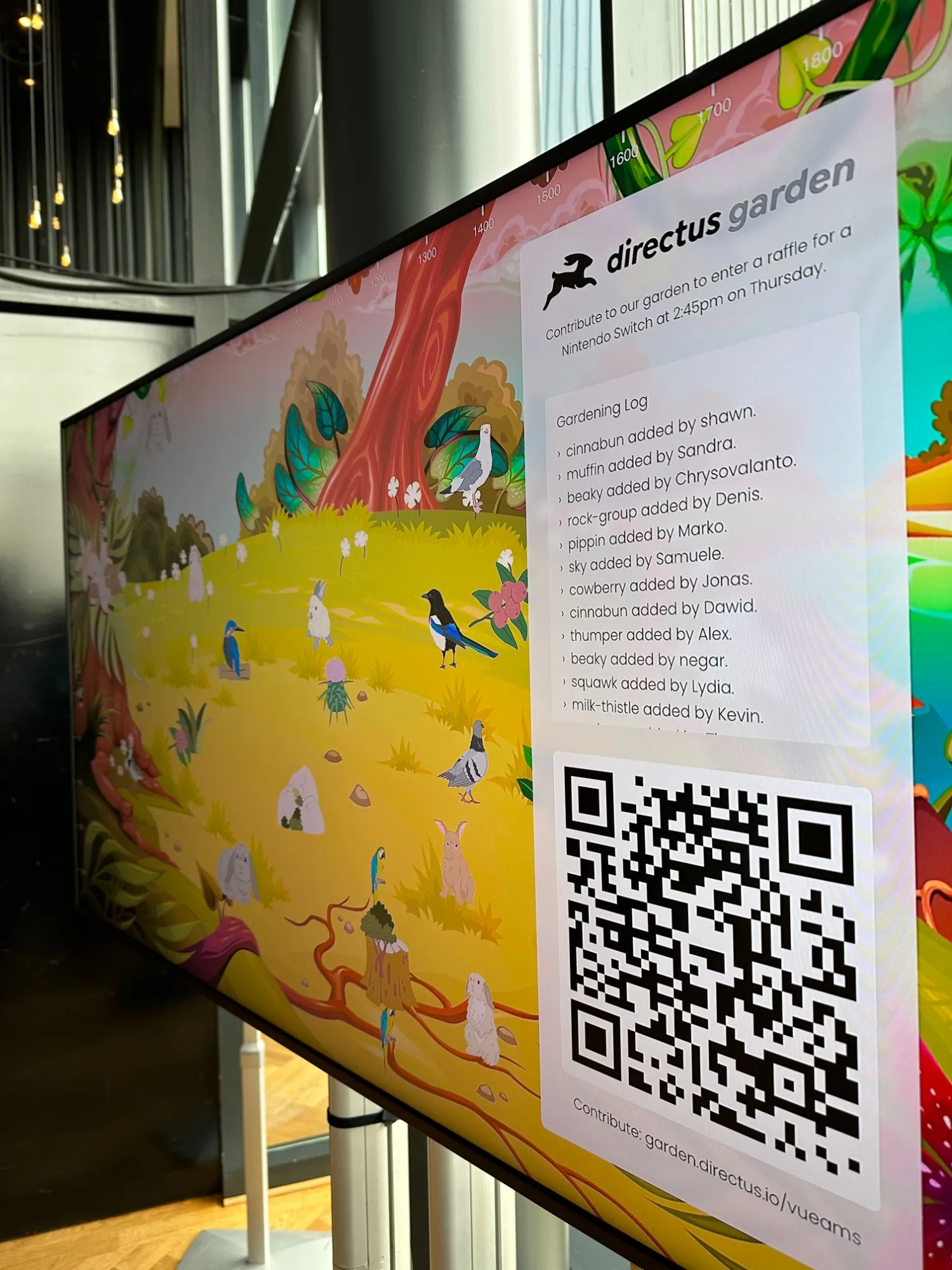
In Directus Garden, attendees registered, authenticated, retrieved the available items, and placed one in a shared garden through real API requests. Directus Realtime updated the booth display. The garden gave authentication and data APIs a purpose you could understand before knowing anything about the platform.
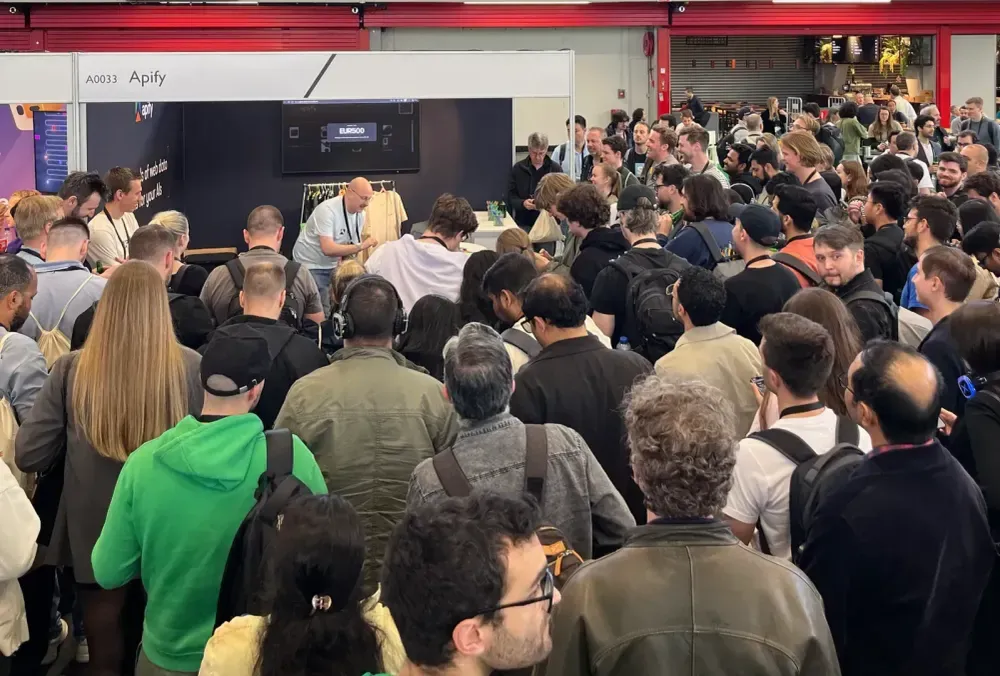
With Wishlist Raffle at Apify, attendees submit a product URL for something they’d like to win. A scraper runs on their own Apify account, extracts the product information, and their choice appears on screen. They’ve chosen the input and seen the platform produce a result. That gives us something concrete to discuss when explaining where scraping might fit into their work.
Orbit Arcade took the same idea further. The Orbit Model describes community members at different distances from a shared centre, from explorers at level 4 to advocates at level 1. I wanted people to experience that movement.
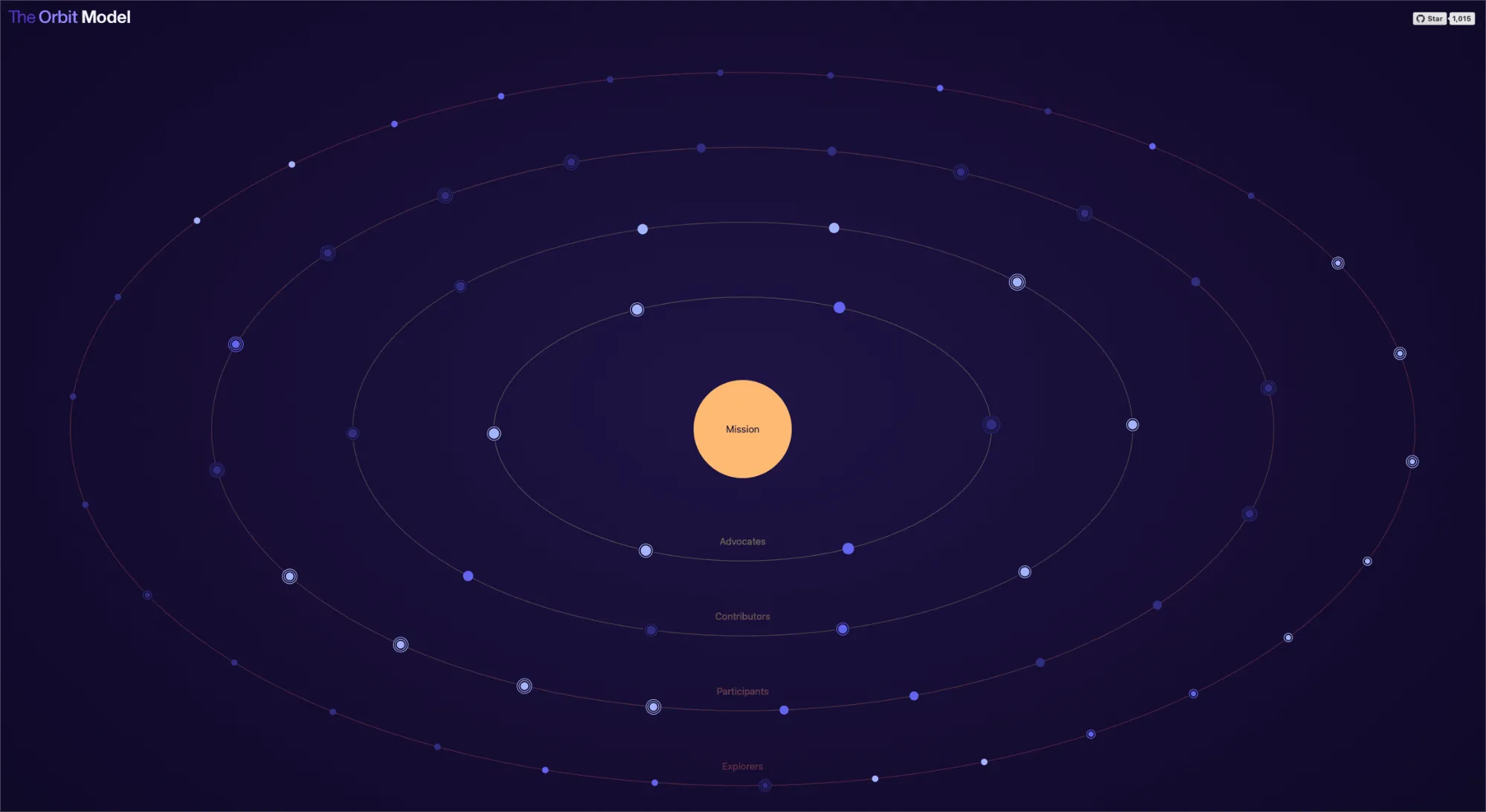
The concept was a built out room on the expo floor filled with traditional arcade cabinets running thematically-relevant microgames. You’d receive a unique identifier, perhaps a QR code or USB stick, linked to a new member in the Orbit workspace powering the experience. At level 4, only certain cabinets would be available.
Playing would record activities against your profile, weighted according to your performance. As you moved towards level 1, you’d unlock cabinets with positive modifiers that accelerated your progress. Reach level 1 and you’d get access to the gold cabinet, where the high score would win. A large LED screen outside would show everyone moving towards the centre of the orbit.
It was a compressed game interpretation of the model, but the relationship was tangible: your activity changed your profile, and your profile changed what you could access. You could experience the product through arcade controls without opening its interface.
My time at Orbit was unfortunately short, so I never got to see this through to fruition, but it’s still my favorite booth activation design that I have spec’d to-date.
Make the result memorable and participation easy
The “wow” moment can be small. You make a request on your phone and a rabbit appears on the big screen. A link you chose becomes structured product data. A cabinet that wouldn’t let you play now recognises you and unlocks.
In each case, something visible happens because of what you did. That’s the moment I’d design around. The effect earns its place by making the product’s behaviour understandable.
Getting there needs to fit the room. Someone is holding a coffee, their laptop is in their hotel room, and they have six minutes before the next talk.
My first plan for Directus Garden expected attendees to bring their own HTTP client. I changed that to a page with code editors that made the real requests, showed responses, and carried tokens into the next step. People still used the API; they spent less time setting up.
Participation shouldn’t be a test of technical skill. Someone who wants to inspect every request should be able to. Someone who wants to add a rabbit should be able to do that too.
I also want the experience to be worthwhile without winning. The garden and wishlist build a shared display where everyone’s contribution has a place. Orbit Arcade deliberately used competition and progression to explain the product. The mechanic should follow what you’re trying to communicate.
Collect data you can use afterward
Build reporting into the activation. At its simplest, that means knowing how many people completed it. Those numbers give you something firmer than “the booth felt busy.”
If participation is associated with a product user ID, you can ask a more useful question later: what did those people do next? Did they return to the product, run something independently, or become a paying customer?
One of the persistent frustrations of developer relations is the gap between meeting someone and knowing whether that interaction led anywhere. An activation tied to an account gives you a way to follow that journey. It won’t prove the booth caused a conversion, but it can make the connection observable.
Decide what you’re looking for before the event, while you can still record the necessary identifiers and distinguish this event’s activity from ordinary usage. Define what counts as a meaningful next action, too. Creating an account to enter a raffle tells you something different from returning a week later to use the product.
Be clear with attendees about what you’re collecting and why. Contacting a winner and opting into future marketing are separate things; Directus Garden included an optional contact opt-in. Account-linked participation also needs to offer enough value to justify the extra step.
Leave the team free to talk
When I say a demo should be passive, I mean it should demand little ongoing attention from the people staffing the booth.
An activation that needs resetting after every participant has created a job. Someone has to keep doing it through the lunch rush, while a colleague takes a break, and when a conversation gets interesting.
People should be able to join while we’re busy. Instructions need to be visible, results should appear automatically, and another colleague should be able to recover a disconnected display without finding the person who built it. That’s where I’d spend time before adding another animation.
The activity should also give us something to talk about. Someone’s wishlist choice can open a conversation about a hobby. An API response can lead to a question about their project. If we’re spending the whole visit explaining the rules, the activation is taking up the space it was meant to create.
I have more of these experiences I’d like to build. Before starting the next one, I’d want to know what someone will understand, where their moment of surprise will come from, what we’ll be able to learn afterward, and how much attention the team will have left for them.